
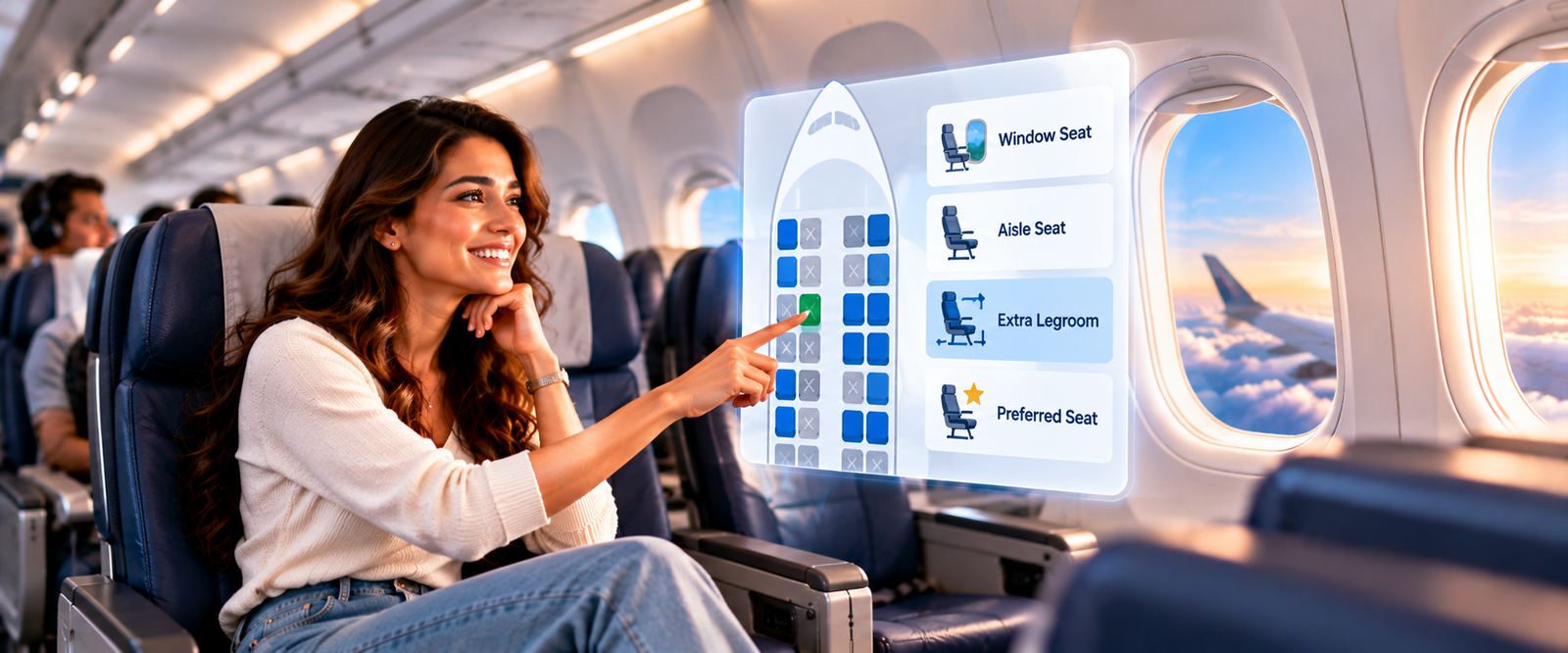
Choosing the right seat can make a significant difference in your flying experience. Whether you prefer a window seat with scenic views, an aisle seat for easier movement, or extra legroom for a long journey, understanding flight seat selection options can help you travel more comfortably.
Airlines offer different seating arrangements, seat categories, and selection policies. Some tickets include complimentary seat selection, while others require an additional fee.
At Flightshelpr, we provide helpful information about airline seat selection, seating preferences, seat selection charges, and ways to manage your flight seats before departure.
Explore Airline Seat Selection Options and Plan a More Comfortable Flight.
Flight seat selection is the process of choosing a specific seat on an aircraft before departure.
Depending on the airline and ticket type, passengers may be able to select their preferred seats during booking, after purchasing a ticket, or during check-in.
Airlines generally display available seats through an interactive seat map.
Passengers can review seating arrangements and select an eligible seat based on their preferences.
Seat selection availability and charges depend on the airline, aircraft, fare category, and reservation conditions.
Different seat types offer different travel experiences.
Window seats are popular among travelers who enjoy looking outside during their journey.
Benefits of Window Seats:
Scenic views during takeoff and landing
A window-side position for resting
Fewer interruptions from passengers moving through the aisle
A comfortable choice for travelers who prefer minimal movement
Window seats may not be ideal for passengers who frequently need to stand up.
Aisle seats provide easier access to the cabin aisle.
Benefits of Aisle Seats:
Convenient access to restrooms
Easier movement during longer flights
Less need to ask neighboring passengers to move
Suitable for travelers who prefer getting up frequently
However, aisle passengers may experience interruptions from people or carts moving through the cabin.
Middle seats are located between other passengers.
They may be included in certain standard seating arrangements or assigned when preferred seats are unavailable.
Middle seats generally offer less personal space than window or aisle seats.
Some airlines provide seats with additional legroom.
These seats may be located in specific rows or designated premium seating areas.
Additional fees or eligibility requirements may apply.
Emergency exit row seats may offer additional legroom.
However, passengers must meet the airline’s safety and eligibility requirements.
Travelers who cannot perform the required emergency assistance duties may not be permitted to occupy these seats.
Preferred seats are typically located in selected areas of the aircraft.
Some airlines charge additional fees for these seats even when they do not provide extra legroom.
Most airlines allow eligible travelers to choose seats through their official booking systems.
Open the operating airline’s official website or mobile application.
Go to the Manage Booking, My Trips, or similar section.
Provide your reservation reference and other requested information.
Review the available seats on your flight.
Select a window, aisle, or other eligible seat based on availability.
Check whether your selected seat requires payment.
Complete the seat selection process and verify your updated reservation.
Seat assignments may still change for operational, aircraft, or safety reasons.
Many airlines offer seat selection during the initial flight booking process.
After choosing a flight and entering passenger information, travelers may be shown an aircraft seat map.
Depending on the fare category, certain seats may be included in the ticket price while others require additional payment.
Choosing a seat during booking may provide access to a wider range of available options.
However, early selection does not guarantee that an airline will never change the assigned seat.
If you did not select a seat when purchasing your ticket, you may still be able to choose one later.
Many airlines allow passengers to manage seating through their reservation details.
To select a seat after booking:
Open your airline reservation.
Find the seat selection or seat management option.
Review available seating.
Select your preferred seat.
Pay any applicable charges.
Confirm the updated seat assignment.
Some restrictive fares may not permit advance seat selection or may charge additional fees.
Seat selection is not always free.
Whether a passenger can choose a seat without paying depends on the airline, fare type, route, and loyalty program benefits.
Some fare categories include standard seat selection at no additional charge.
Other fares may require payment to reserve a specific seat.
Airlines may charge extra for seats in desirable cabin locations.
Eligible frequent flyer members may receive complimentary or discounted seat selection.
Some airlines assign seats automatically during check-in when travelers have not purchased or selected one.
Passengers should verify the applicable charges before confirming their seat.
Airline seat selection fees vary.
The price may depend on:
Airline
Flight route
Travel date
Aircraft configuration
Seat location
Fare category
Flight duration
Remaining seat availability
Loyalty program eligibility
For example, a preferred aisle seat may have a different price from an exit row or extra-legroom seat.
Airlines may also change seat selection charges over time.
Travelers should check the actual price displayed in their reservation.
Choosing between a window and aisle seat depends on personal preferences.
| Window Seat | Aisle Seat |
|---|---|
| Offers outside views | Provides easier aisle access |
| Convenient for resting against the cabin wall | Convenient for moving around |
| Fewer interruptions from neighboring passengers | Easier restroom access |
| May require asking others to move | May experience more aisle traffic |
| Popular for scenic flights | Popular for long-haul travel |
Travelers who enjoy sightseeing may prefer window seats, while passengers who want easier movement may prefer aisle seats.
The best airplane seat depends on the traveler’s needs.
Consider eligible extra-legroom seating areas.
Window seats may provide the most enjoyable outside views.
Aisle seats generally offer easier access to the cabin.
Adjacent seats may help families travel together, subject to airline policies and availability.
Travelers may prioritize legroom, seat width, recline, and cabin location.
Seats toward the front of the cabin may allow passengers to leave sooner, although actual deplaning procedures vary.
Always review the aircraft seat map before making a selection.
Airlines have different seat assignment procedures and seating products.
American Airlines provides seat selection options depending on the ticket category, aircraft, and available seating.
Some preferred and extra-legroom seats may require an additional charge.
Delta offers different seating options across its cabin products.
Advance seat selection eligibility depends on the purchased fare and applicable benefits.
United provides seat selection options that vary by fare category.
Certain restrictive fares may have limitations on advance seat assignments.
Southwest’s seating and fare arrangements have changed from its historical open-seating model. Travelers should review the airline’s current assigned-seating and seat selection rules for their travel date.
JetBlue offers seat selection and additional-legroom seating options, subject to fare conditions.
Frontier provides standard and premium seating options, with applicable fees and fare-based benefits.
Always check the airline’s official policies for the most current information.
Many airlines allow passengers to change their assigned seats before departure.
Changes may be available through the airline’s website, mobile application, or customer service channels.
Seat changes depend on availability and fare conditions.
Additional charges may apply when moving to a more expensive seating category.
If a traveler has already purchased a seat, refund or price-difference rules vary by airline.
Some airlines allow passengers to choose or change seats during online check-in.
Available options may include standard seats, preferred seats, or extra-legroom seats.
However, seat availability may be more limited closer to departure.
If you have a strong seating preference, consider reviewing available options before the check-in window opens.
Families often prefer to sit together, especially when traveling with younger children.
Airline family seating policies vary.
Some US airlines have commitments or procedures designed to help children sit next to accompanying adults under qualifying conditions.
However, eligibility and guarantees depend on the airline’s current policy and the circumstances of the reservation.
Families should review the airline’s seating rules before booking and contact the carrier promptly if suitable adjacent seats are unavailable.
Passengers with disabilities may have specific seating needs.
Applicable US accessibility regulations require airlines to provide certain seating accommodations in qualifying circumstances.
Travelers should communicate their accommodation needs to the airline as early as practical.
Required disability-related seating accommodations should not be treated as optional premium seat purchases.
Passengers can review airline accessibility policies and applicable US Department of Transportation guidance.
Seat selection for international flights may involve additional considerations.
Travelers should review:
Flight duration
Aircraft configuration
Cabin class
Seat width and legroom
Connecting flight segments
Airline seat selection charges
Codeshare and partner airline arrangements
For codeshare itineraries, seat selection may need to be completed through the operating airline.
A selected seat on one flight segment does not automatically apply to every connecting flight.
Although these terms are sometimes used interchangeably, they are not the same.
Seat Selection: Choosing a specific available seat within the cabin or seating category.
Seat Upgrade: Moving to an enhanced seating product or higher cabin class, depending on the airline’s offering.
For example, selecting a standard economy window seat is seat selection.
Purchasing a business class upgrade is a cabin upgrade.
Understanding this difference helps travelers compare available options and avoid unnecessary charges.
Airlines may change seat assignments for operational, safety, or aircraft-related reasons.
If your assigned seat changes, review your updated boarding pass or reservation.
If you paid for a specific seating product that the airline did not provide, you may be eligible for a refund of the applicable seat fee, depending on the circumstances and governing rules.
Contact the airline and retain your original seat selection receipt.
Book Early: More seats may be available when reservations first open.
Review the Seat Map: Check available seating categories before making a decision.
Compare Seat Fees: Understand the cost of preferred and extra-legroom seats.
Consider Flight Duration: Comfort may be more important on long-haul journeys.
Check Aircraft Details: Seat layouts and features vary by aircraft.
Review Family Seating Policies: Understand available arrangements when traveling with children.
Check Accessibility Options: Contact the airline about necessary accommodations.
Confirm Your Assignment: Review your seat details before departure.
At Flightshelpr, we aim to make airline travel information easier to understand.
Learn about common airline seat selection procedures.
Understand the differences between window, aisle, middle, and extra-legroom seats.
Explore the factors that influence airline seating charges.
Review general information about seating restrictions and reservation management.
Discover practical ways to choose seats that match your comfort preferences.
Our goal is to help travelers make informed decisions about their seating arrangements.
Whether you prefer a window seat, an aisle seat, or additional legroom, selecting the right seat can improve your overall travel experience.
Review airline seating policies, compare available options, and confirm any additional fees before choosing your seat.
Explore Flight Seat Selection Information with Flightshelpr and Plan a More Comfortable Journey.
Flightshelpr is an independent travel information platform. Seat availability, assignments, pricing, and seating policies are controlled by the operating airline. Flightshelpr does not guarantee seat availability or specific seating arrangements.
Flight seat selection allows eligible passengers to choose a specific available seat before departure.
Yes. Many airlines allow passengers to select or change seats after booking, depending on their fare conditions.
Some tickets include complimentary seat selection, while others require additional payment.
Open your airline reservation, access the seat map, and choose an available window seat.
Many airlines offer seat selection during online check-in, subject to availability.
Travel plans can change. Learn about common airline rules and discover what to check before updating a ticket, choosing a seat or requesting a refund.
Our easy-to-follow guides help you find the right questions to ask and the next steps to consider.
From a misspelled passenger name to a last-minute schedule adjustment, airline rules can be confusing. Browse clear policy explainers and practical travel information in one convenient place.
Address
456 Montgomery Street, Suite 1200, San Francisco, CA 94104, USA
info@flightreservationhelpline.com
+1-815-991-4848
Disclamer
Disclaimer: Flightshelpr.com is a travel information website that gives general advice about airline rules, bookings, cancellations, refunds and other travel matters. FlightShelpr.com tries to keep its content accurate and up to date; airline rules, fees and services can change at any time. Flightshelpr.com is not linked to any airline unless it says so. Visitors should confirm details directly with the airline before making travel plans. Flightshelpr.com is not liable, for losses caused by relying on this website or other websites. All trademarks and brand names belong to their owners.